


Duck Cooking
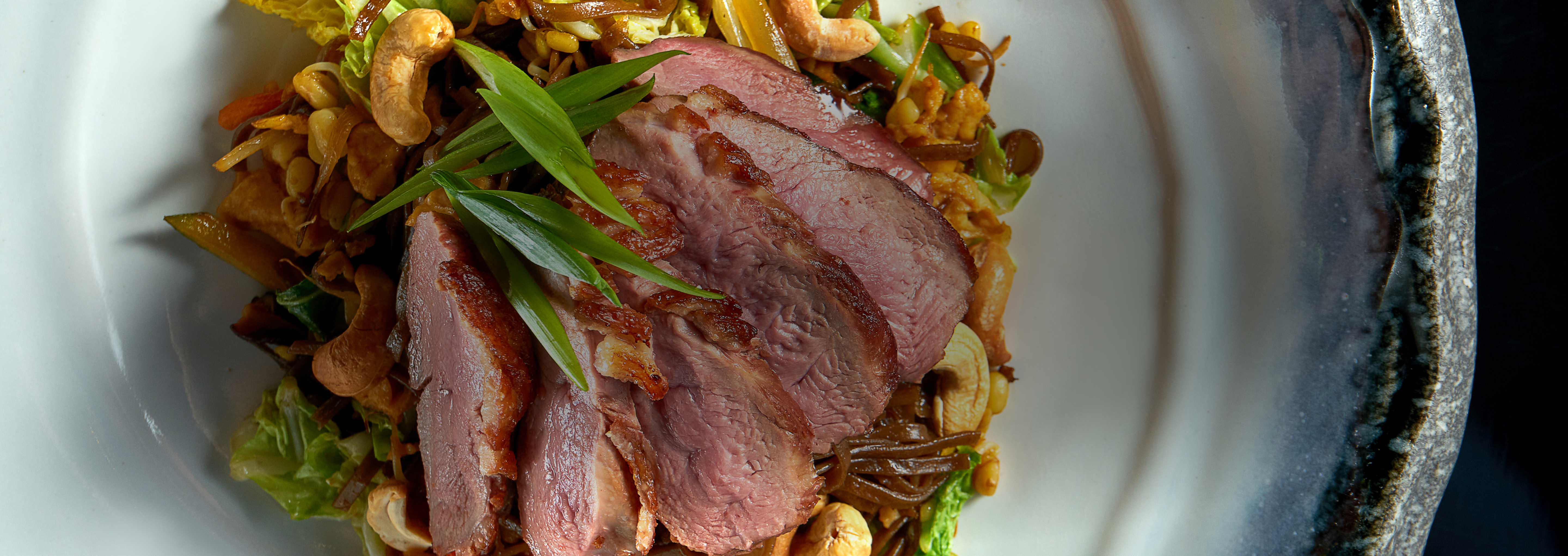
Duck is the ultimate festive meat. Magret, confit, aiguillette — each cut offers a unique experience. Richer than chicken, duck requires a little technique but the result is worth every minute.
From preparation to plate

Preparation
For the duck breast, score the skin with a knife in a crisscross pattern without cutting into the meat. Season with salt and pepper. Take out of the fridge 30 minutes before.

Cooking
Start the duck breast skin-side down in a cold pan over medium heat. The fat will slowly render and the skin will become crispy. Flip and finish flesh-side down for 3 to 4 minutes.

Rest
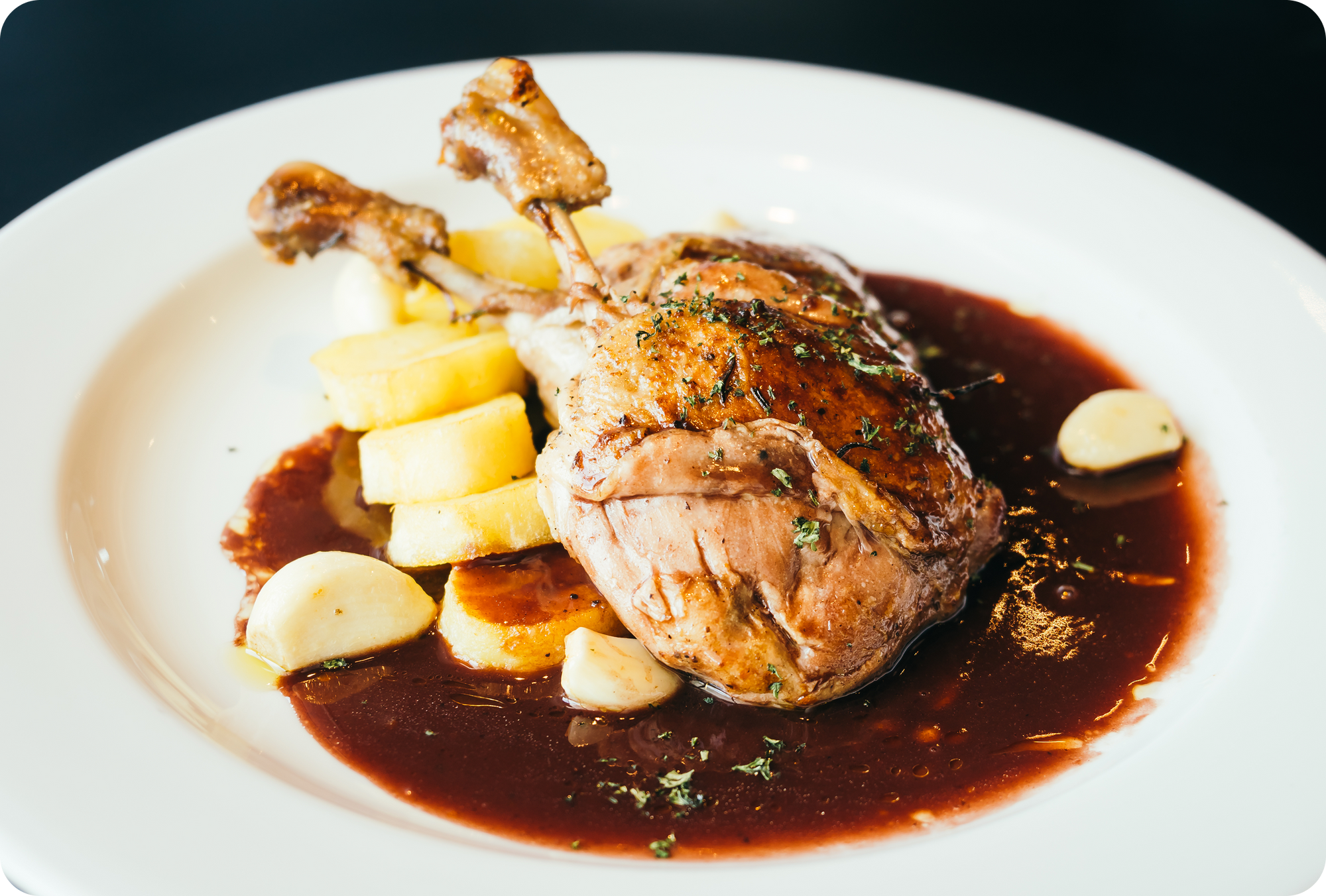
Let the duck breast rest for 5 to 8 minutes under foil. The confit duck legs do not need to rest – they are already slow-cooked.

Service
Slice the duck breast thinly on the bias. For the confit duck legs, bake them in the oven for 15 minutes at 200°C to reheat and crisp the skin before serving.
Why let the duck rest?
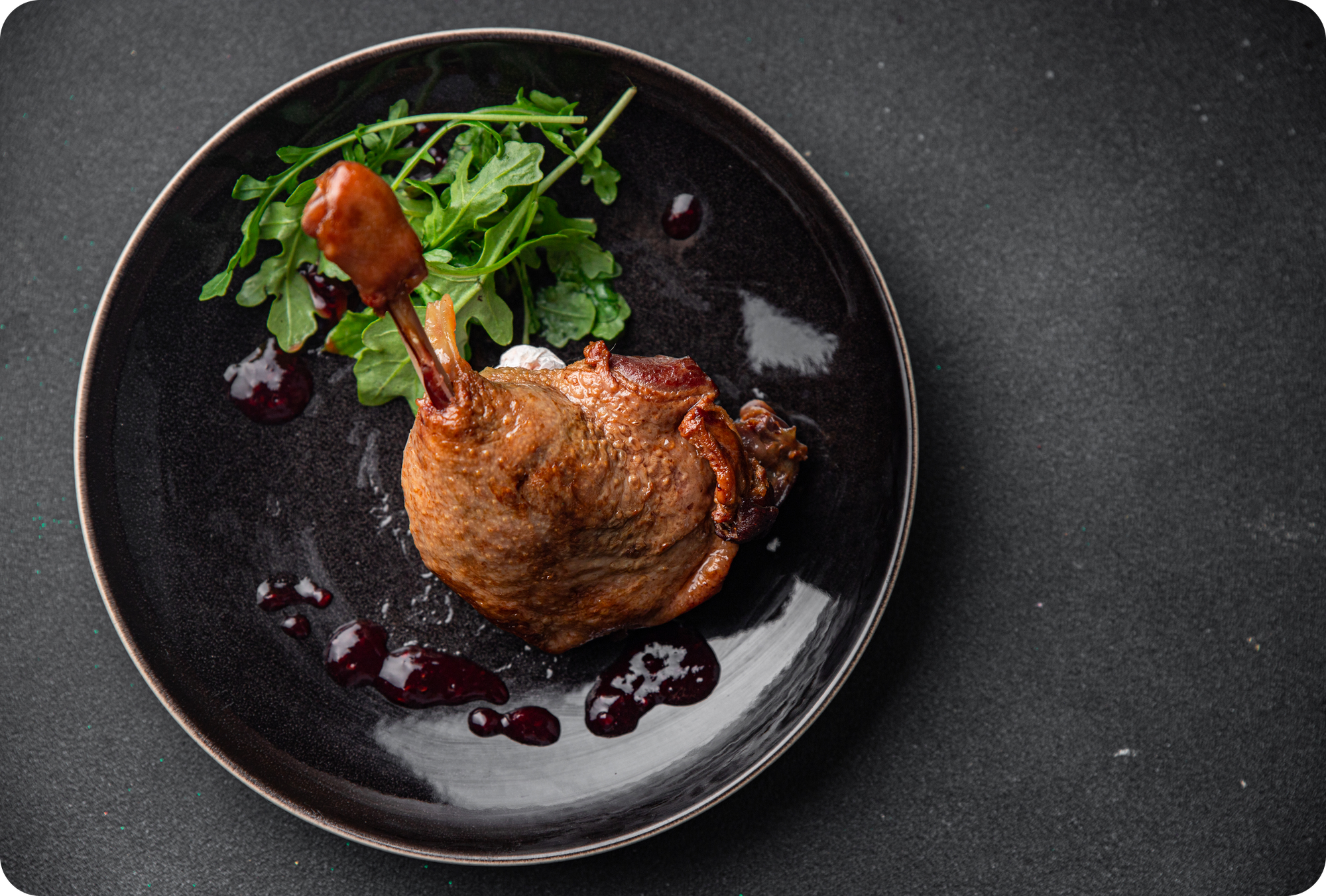
During cooking, heat pushes the juices towards the center of the meat. By letting the duck rest for a few minutes after cooking, the juices redistribute evenly. The result: more tender, juicier meat and better preserved flavors.
Temperature Chart
| Cup | Cooking | Internal temperature | Time (per book) |
|---|---|---|---|
| Duck breast | Rare | 52°C – 54°C | 8 min skin side + 3 min flesh side |
| Duck breast | Medium | 58°C — 60°C | 8 min skin side + 5 min flesh side |
| Tenderloin tip | Medium | 58°C — 60°C | 3 - 4 min per side in the pan |
| Confit thigh | To reheat | Already cooked | 15 – 20 min in the oven at 200°C |
| Whole duck | Roast | 74°C (thigh) | 20 min/lb in the oven at 190°C |
Butcher's tips

Cold pan for the duck breast
Unlike other meats, duck breast starts in a cold pan. The fat needs to render slowly to achieve perfectly crispy skin.

Keep the duck fat
The fat rendered during the cooking of duck breast is precious. Strain it and keep it in the refrigerator: it's perfect for roasting potatoes.

Duck breast is eaten rare
Duck breast is red meat, not white poultry. It is enjoyed like a steak, rare or medium. Overcooked, it becomes dry and loses all its appeal.
Our Selection

Lean ground beef
Choose your option


Beef flank steak 250 g
Choose your option

Hanger steak ≈ 450g
Choose your option

Extra-lean ground beef
Choose your option

Beef tenderloin
Choose your option

Roast House Tartare 200g
Choose your option

Beef sirloin steak 250 g
Choose your option


